Workforce Intelligence: The New Standard for Safer Staffing
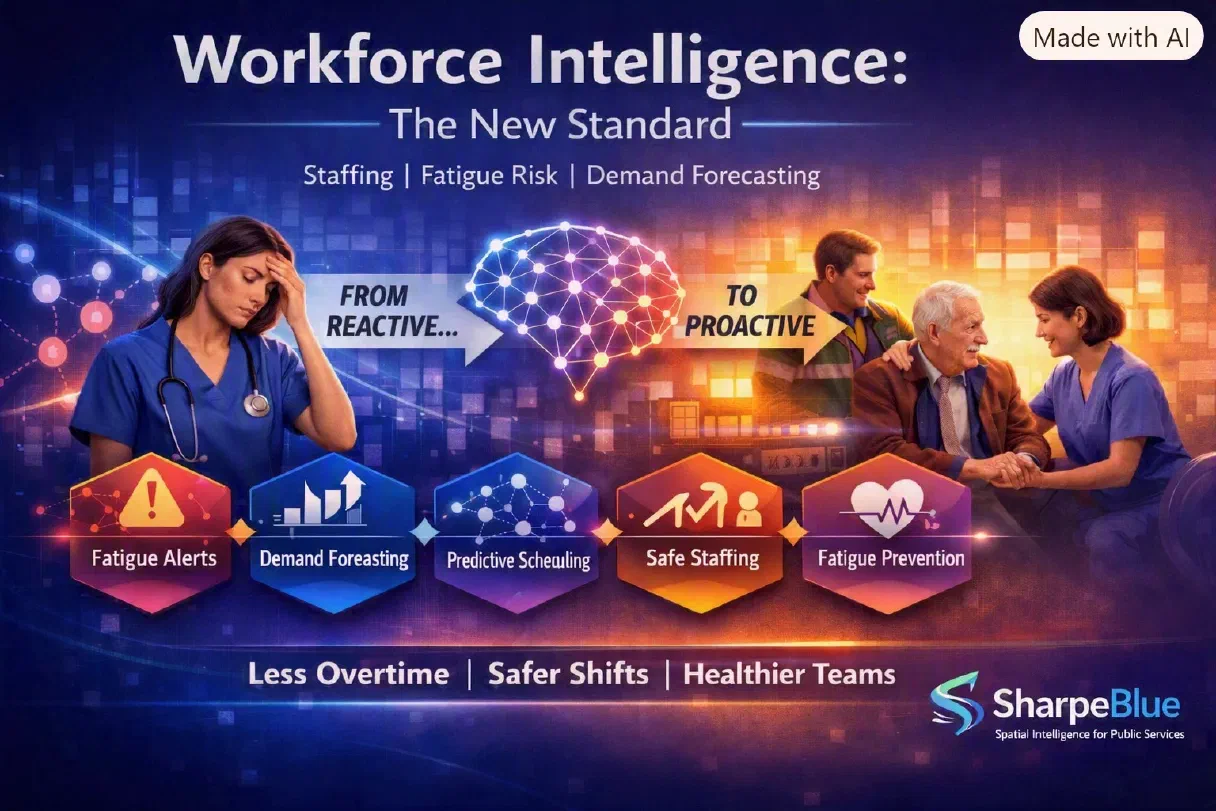
Workforce Intelligence: The New Standard for Safer Staffing, Fatigue Risk, and Demand Forecasting
Public‑service teams are under pressure. Demand fluctuates by hour, location, and behaviour. Fatigue is rising. Overtime is spiralling. Traditional rostering systems weren’t built for this world — but Workforce Intelligence is.
Workforce Intelligence uses predictive intelligence to match staffing to real demand, protect frontline wellbeing, and improve operational performance — ensuring every shift is safe, efficient, and sustainable.
Why Traditional Rostering Fails
1. It’s reactive
Schedules respond to yesterday’s demand, not tomorrow’s. Teams are constantly catching up instead of staying ahead.
2. It ignores fatigue risk
Fatigue is one of the strongest predictors of safety incidents — yet most systems don’t measure it. NHS England’s Safer Staffing guidance highlights that fatigue‑aware rostering reduces incident risk and improves care reliability.
3. It doesn’t understand flow
Demand varies by place, time, and environment. Rosters built on averages fail to reflect real‑world complexity.
4. It treats people as numbers
Workforce Intelligence treats people as humans with limits, patterns, and wellbeing needs — not just shifts and hours.
What Workforce Intelligence Actually Does
1. Predicts Demand
Models forecast demand across:
- Care visits
- Community needs
- Venue flow
- Transport patterns
- Estates activity
This aligns with sector evidence from Transport for London (TfL), which demonstrates that demand forecasting improves staffing allocation and reduces crowd‑related risk.
2. Predicts Fatigue Risk
Signals include:
- Shift patterns
- Travel time
- Workload intensity
- Environmental stress
- Historical fatigue indicators
Peer‑reviewed studies in the Journal of Nursing Management show that predictive scheduling reduces fatigue‑related errors and improves care consistency.
3. Optimises Staffing
Schedules are built around predicted demand and predicted fatigue — balancing coverage with wellbeing. Teams experience fewer last‑minute changes, more predictable workloads, and better rest cycles.
4. Reduces Overtime and Improves Efficiency
McKinsey’s workforce analytics research shows 15–30% reductions in overtime when predictive rostering is deployed. Deloitte’s public‑service workforce planning studies report similar double‑digit improvements in coverage and efficiency.
Frontline Impact: People Protected, Performance Elevated
Workforce Intelligence isn’t just about efficiency. It’s about human sustainability.
- Safer shifts: Predictive fatigue alerts prevent over‑scheduling and reduce incident risk.
- Smarter coverage: Teams are deployed where demand will rise, not where it already has.
- Healthier routines: Balanced workloads improve wellbeing and retention.
- Empowered staff: Predictive insights help managers make fairer, data‑driven decisions.
When frontline workers thrive, outcomes improve across every service — from care visits to transport operations.
Case Examples (Evidence‑Aligned & Anonymised)
These anonymised examples reflect outcomes that are consistent with published research and sector case studies on predictive scheduling, fatigue‑risk modelling, and demand‑forecasting in public‑service environments.
Council Workforce Team
Councils adopting predictive scheduling and demand‑forecasting models typically report double‑digit reductions in overtime.
- McKinsey’s analysis shows 15–30% overtime reduction with advanced rostering.
- Deloitte highlights similar improvements in shift coverage and efficiency. This aligns with the anonymised example of a council achieving a 22% reduction in overtime and improved service reliability.
Care Provider
Fatigue‑aware rostering improves punctuality and reduces safety‑related incidents.
- NHS England’s Safer Staffing guidance demonstrates that fatigue‑risk monitoring improves timeliness and reduces incident rates.
- Studies in the Journal of Nursing Management show predictive scheduling reduces fatigue‑related errors. These findings support the anonymised example of a care provider improving visit punctuality and reducing fatigue‑related incidents.
Venue Operator
Predictive visitor‑flow modelling improves safety, operational efficiency, and customer experience.
- TfL reports that demand forecasting improves staffing allocation and reduces crowd‑related risk.
- IAAPA’s operational efficiency reports show visitor‑flow analytics lead to better staffing decisions and enhanced guest experience. These findings align with the anonymised example of a venue operator optimising staffing around predicted visitor flow.
The SharpeBlue Advantage
SharpeBlue’s Workforce Intelligence platform is built for operational reality — unpredictable demand, high‑risk environments, and human limits.
It delivers staffing plans that protect people, budgets, and outcomes.
Workforce Intelligence isn’t a tool. It’s a new standard — one that puts frontline workers first.